

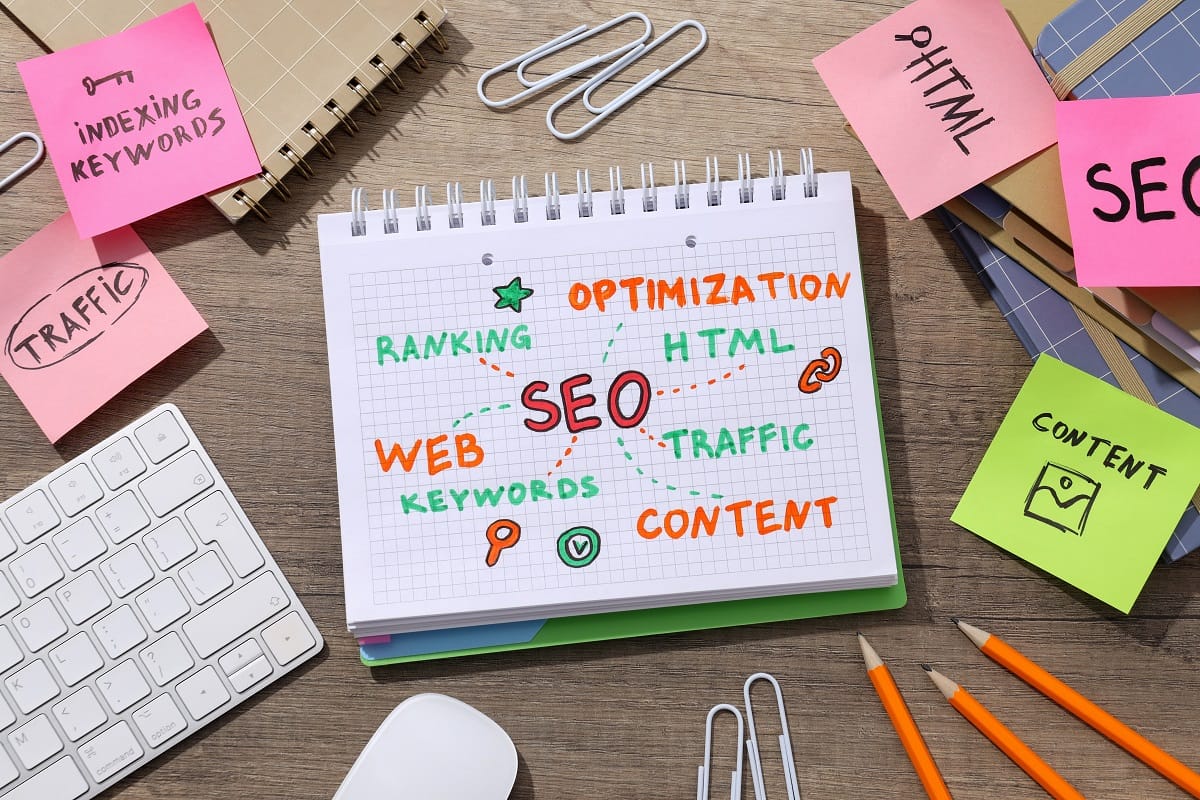
SEO Optimization in easy words is a billboard or a targeted map for your online presence. You could have the best products in the world, but if nobody can find you, does it even matter? In 2026, where your competitors are fighting tooth and nail for the same customers, showing up in search engine ranking isn’t optional anymore. If you want to survive get your hands on SEO optimization.
Imagine you just launched a beautiful website. It’s got all the embellishments. Good content, stunning design and a perfectr use interface. You hit publish, sit back, and wait for customers to flood in, but nothing happens. Days turn into weeks but you get crickets. This is what happens when you forget the backbone of digital success, SEO optimization.
Your website without SEO is like opening a shop in the middle of nowhere with no signs pointing to it. Let us walk you through exactly why SEO matters and how it transforms invisible businesses into digitally operated revenue-generating machines. Read along to make your customers find you naturally and inevitably.
Think of on-page SEO as teaching your website how to have a proper talk with Google. When someone searches “best coffee beans in Manchester,” Google needs to understand what your website offers. And you must be the right answer. On-page SEO helps you achieve this. Let’s see what people are discussing about on-page SEO on Quora.
Keyword research is your starting point. Successful businesses know what their potential leads are searching for. They use tools like Google’s Keyword Planner or Answer The Public to discover the exact phrases customers type when they need your type of product or service. Keywords are not just words, they’re windows into your customers’ minds.
Once you’ve got your keywords, you weave them naturally into your content. Your page titles, meta descriptions, headers, and body content should all work together. But here’s the trick: don’t stuff keywords like you’re trying to game the system. Write for humans first, optimize for search engines second. Google’s smart enough to spot fake optimization from a mile away.
Your content quality matters more than ever. Reddit users consistently mention that thin, generic content gets buried while detailed, helpful content climbs the rankings. If you’re writing a blog post, make it comprehensive. Answer questions people haven’t even thought to ask yet. Include images with proper alt text. Use internal links to guide visitors through your site. Break up text with headers so people can scan easily.
URL structure matters too. Keep your URLs clean and descriptive. Instead of “yoursite.com/page123,” use “yoursite.com/digital-marketing-services.” Simple changes like this improve both user experience and your chances of ranking higher. This is fundamental on-page optimization that builds your website authority.
If on-page SEO is what you do on your own website, off-page SEO is everything that happens everywhere else online. It’s your digital reputation—what others say about you when you’re not in the room.
Backlinks are the currency of off-page SEO. When another reputable website links to yours, it’s like getting a vote of confidence. Google sees this and thinks, “If trusted sites are linking to this business, it must be valuable.” But not all backlinks are equal. One link from a respected industry publication beats fifty links from random, low-quality sites.
How do you get quality backlinks? Create content so good that people can’t help but share it. Write original research, comprehensive guides, or unique insights that others in your industry reference. Guest posting on relevant blogs, getting featured in industry publications, and building genuine relationships with other businesses all contribute to your link building strategy and domain authority.
Social signals matter more than people think. While Reddit links are technically “nofollow,” as one Reddit discussion explained, they still drive massive referral traffic and engagement signals that Google notices. When your content gets shared, discussed, and upvoted on platforms like Reddit, it creates buzz that search engines can’t ignore. This builds brand credibility and online reputation.
Online reviews and local citations play a huge role too, especially for local businesses. Encourage happy customers to leave reviews on Google, Trustpilot, and industry-specific review sites. These aren’t just nice to have—they directly impact your rankings and build trust signals that convert visitors into customers. This is critical for local search visibility and SERP features.
Forums, community participation, and authentic engagement on platforms like Quora build authority. Answer questions in your field, share insights, and genuinely help people. This positions you as a thought leader and naturally attracts links and mentions, strengthening your topical authority.
This is where most businesses drop the ball. Technical SEO isn’t sexy. It’s not creative. But it’s absolutely essential. Think of it as the foundation of a house—you don’t see it, but without it, everything collapses.
Site speed is critical. If your website takes more than three seconds to load, you’re losing customers before they even see your content. Google knows this and ranks faster sites higher. Compress your images, use browser caching, minimize your code. Tools like Google PageSpeed Insights show you exactly what needs fixing.
Mobile optimization isn’t optional in 2026—it’s mandatory. More than half of all web traffic comes from mobile devices. If your site doesn’t work perfectly on phones and tablets, Google penalizes you. Use responsive design that automatically adjusts to any screen size. Test your site on multiple devices. This is fundamental mobile-first indexing and responsive design.
Your site architecture needs to make sense. Google’s bots crawl your website to understand its structure. Create a logical hierarchy with clear categories. Use XML sitemaps to help search engines find all your pages. Fix broken links immediately—they’re like dead ends that frustrate both users and search engines, hurting your crawlability.
Structured data (also called schema markup) helps search engines understand your content better. It’s the code that makes those fancy rich snippets appear in search results—star ratings, recipe cards, event details. Implementing structured data can dramatically increase your click-through rate and improve rich snippets visibility.
Security matters for SEO too. Sites with HTTPS rank higher than those without. It shows Google and your customers that you take security seriously. Get an SSL certificate if you don’t have one already. This affects your Core Web Vitals and overall site health.
According to technical discussions on Reddit, issues like duplicate content, poor internal linking, slow server response times, and missing canonical tags can silently kill your rankings. Regular technical audits catch these problems before they become disasters. This is essential website performance maintenance and indexability optimization.
Here’s the question every business owner asks: “When will I see results, and what kind of return can I expect?” The honest answer? SEO takes time, but the payoff is massive.
Most businesses start seeing meaningful traction within 3-6 months of consistent SEO optimization. But the real magic happens in months 6-12 and beyond. According to recent data, businesses typically achieve positive ROI within 6-12 months, with peak results hitting in years two and three. We’re talking about returns of 200-700% or even higher, depending on your industry and how well you execute.
Let me give you real numbers. Recent statistics show that SEO leads have a 14.6% close rate, while traditional outbound marketing sits at just 1.7%. That’s nearly 9 times more effective. E-commerce businesses report ROI as high as 1,600% compared to paid search. Real estate and financial services see some of the highest returns—1,389% and 1,031% respectively. These aren’t vanity metrics—this is real revenue growth and lead generation.
Unlike paid advertising that stops the moment you stop paying, organic traffic is an asset that keeps giving. That blog post you publish today could drive customers for years without additional spending. As one Shopify SEO expert explained, “Over the long term, SEO is almost always going to have a more favorable ROI versus paid channels.” This compounding effect creates sustainable business growth.
Track your conversion rates, not just traffic. A thousand visitors who don’t buy means nothing. But 100 targeted visitors from SEO who convert at 5%? That’s five customers you didn’t have before. Use Google Analytics to monitor which keywords drive actual revenue, which pages convert best, and where visitors drop off. This data-driven decision making improves your marketing efficiency and customer acquisition cost.
The businesses winning with SEO aren’t just getting more traffic—they’re dominating their industries. They show up for every relevant search. They capture customers at every stage of the buying journey. They build brand visibility that compounds over time. This is about market positioning and long-term competitive advantage.
One business we worked with saw a 542% increase in organic traffic and a 550% increase in sales within a year of implementing proper SEO optimization. Another tripled their monthly leads without increasing their marketing budget. These results aren’t luck—they’re the natural outcome of strategic SEO done right, combining content marketing with solid technical implementation and off-page strategies.
Look, SEO isn’t some mystical art that only experts can master. It’s a systematic process that any business can implement. But here’s the catch—you need to actually do it, not just think about it.
Start with an SEO audit of your current website. Where are you now? What’s broken? What opportunities are you missing? Tools like Google Search Console show you exactly how Google sees your site. Fix the low-hanging fruit first—broken links, slow pages, missing meta tags, poor mobile experience.
Then build a content strategy around your keyword research. What questions are your customers asking? What problems can you solve? Create content that answers these questions better than anyone else. Publish consistently. One amazing piece of content beats ten mediocre ones every time. Focus on search intent and user-centric content.
Get serious about building quality backlinks. Reach out to industry blogs, offer to write guest posts, create shareable content, engage authentically in communities. Every quality link is a vote for your website’s credibility and improves your page authority.
Don’t neglect the technical foundation. Speed up your site, ensure mobile optimization, implement structured data, and maintain clean site architecture. These aren’t optional extras—they’re necessities that impact your indexing and ranking factors.
Most importantly, track everything. Measure your Google visibility, monitor keyword rankings, watch your organic search traffic grow, and connect it all to actual business results. SEO without measurement is just guessing, and guessing costs money. Develop KPIs and create an SEO dashboard to monitor progress.
At 9 Steps, we’ve built our reputation on delivering measurable SEO results that transform businesses. We don’t do cookie-cutter strategies or empty promises. We audit your situation, identify opportunities, implement proven tactics, and track every metric that matters. Our SEO services combine technical expertise, content strategy, and link building into cohesive campaigns that drive real ROI.
The businesses dominating Google in 2026 aren’t the ones with the biggest budgets—they’re the ones that started taking SEO seriously yesterday. The second-best time to start? Right now. Every day you wait is another day your competitors are capturing the customers who should be finding you.
Ready to stop being invisible online and start dominating your market? Visit us at 9steps.org and let’s build an SEO strategy that makes your business impossible to ignore. Your competitors are already climbing the rankings. The question is: will you beat them to the top?
Remember: The businesses thriving online today all started exactly where you are. The only difference? They took action. Don’t let another day pass watching competitors steal your customers.
To support different digital marketing strategies, we offer complementary services:


